Love of Learning
Your Creative Potential Didn’t Disappear. It Just Fell Asleep
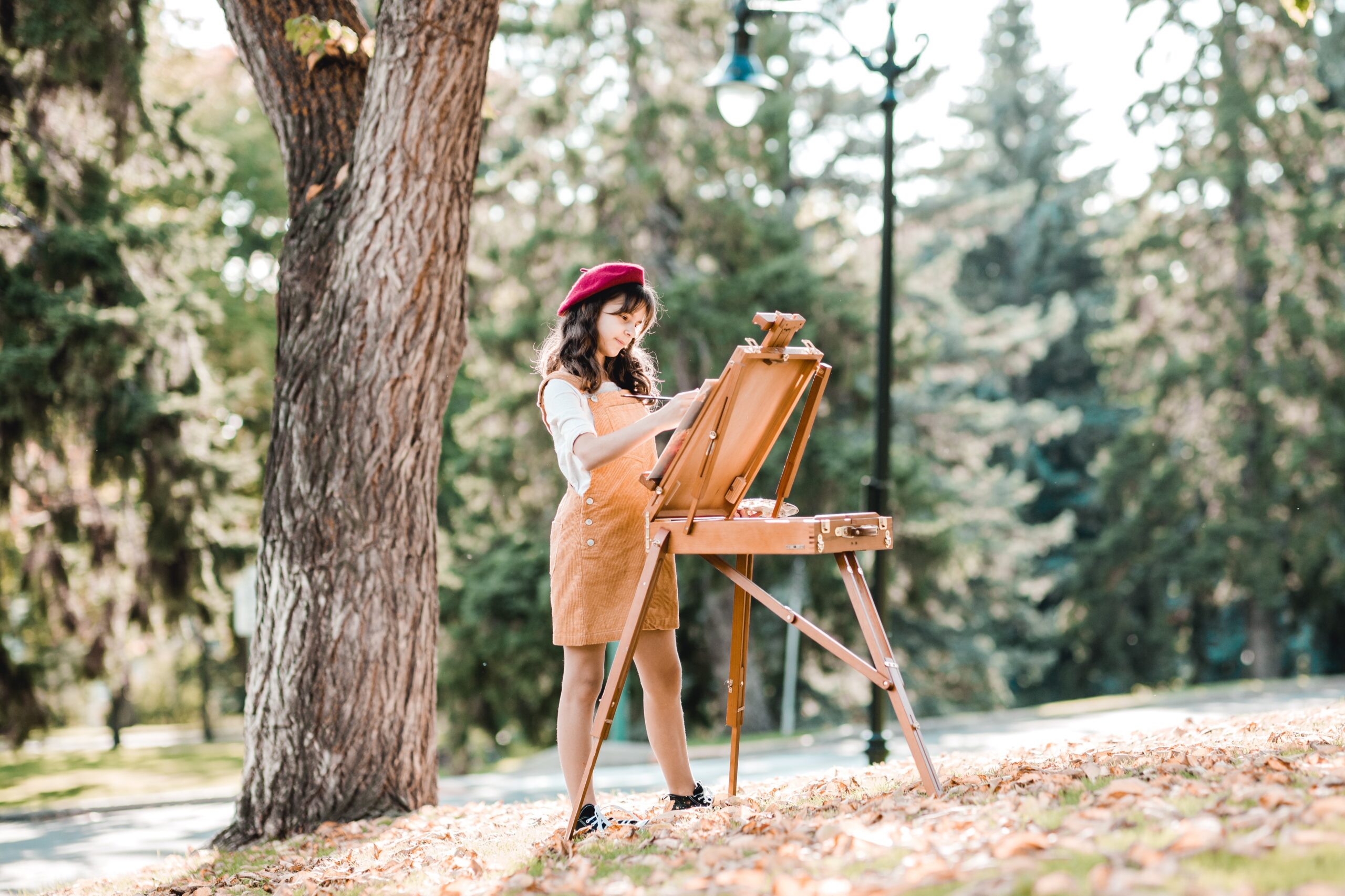
We are all born with a unique set of creative abilities that make our view of the world one-of-a-kind. But what happens to us as we grow up? Why are so many people convinced they’re “not creative,” even though as children they could spend hours drawing, making up stories, or building fantastic constructions? It’s as if we find ourselves in a state of winter hibernation — our creative abilities don’t disappear, they fall asleep under layers of social limitations and fear.
Creativity Isn’t Talent. It’s A Basic Setting
One of the most destructive myths is the idea that creativity is only available to the talented few. Research shows that creativity isn’t a privilege of geniuses — it’s a fundamental human ability, as natural as language or logical thinking.
From an evolutionary perspective, creative thinking developed as a survival tool. Our ancestors were constantly searching for unconventional solutions in the face of brutal survival conditions: new ways to find food, protect themselves from predators, make tools, and build shelters.
Modern neuroscience has shown that the adult brain can form new neural connections well into old age. Which means we can develop our creative abilities regardless of age or prior experience.
What Happens When You Create?
The benefits of bringing creativity into daily life are enormous. Psychologically, it reduces anxiety and stress, helps process emotions, improves self-esteem, and brings you into a state of flow — a complete immersion in which time disappears, the inner critic quiets, and body and mind work as one.
Creativity also fosters unconventional thinking, mental flexibility, and better memory and concentration. We cheer and encourage children when they sing at school concerts — but when was the last time you enjoyed singing or playing your favorite instrument?
Even 15 minutes of creativity a day changes how you experience everything else.
How to Tell If Your Creative Potential Is Dormant?
Let’s diagnose whether psychological barriers are keeping your creative potential in hibernation. There are a few telltale signs that indicate mental blocks:
- The “that’s not for me” syndrome — automatically excluding yourself from any creative activity with the line “I have no talent.”
- Fear of imperfection — refusing to try creating something new out of fear that the result will be “bad.”
- Creative procrastination — endlessly putting off creative projects until “a better time.”
- Impossibly high standards — comparing your first attempts to the work of professionals with years of experience.
Most of the time, creative abilities aren’t blocked by a lack of talent. They’re blocked by psychological barriers built up through socialization. Phrases many of us heard as children: “stop making things up,” “be realistic,” “that’s not practical,” “anyone can do that,” “go do something useful” — these gradually build an inner censor that suppresses creative impulses. Add to that environment of competition and constant comparison, and the inner critic learns to keep those impulses locked down.

Four Techniques to Wake Up Right Now
So, where do you start with daily creative practices that can make you feel capable and motivated? Here are some techniques to help you wake from creative hibernation and believe in your ability to create.
- The “15-Minute Creative” method. Every day, set aside 15 minutes for any creative activity without the goal of making something significant. Doodle, write absurd poems, photograph ordinary objects from unusual angles. The goal is not the result — it’s activating creative neural pathways.
- The “random stimulus” technique: Open a dictionary to a random page and pick the first word you see. Use it as a starting point for any creative project. This exercise trains the brain to find unexpected connections between concepts.
- The “reverse thinking” practice: Instead of thinking about how to solve a problem, think about how to make it worse. Then flip those answers around. This paradoxical approach often leads to unexpected solutions.
- The “creative constraints” experiment: Set yourself strict limitations and try to create within them. Write a story in 50 words, paint a picture in one color, compose a melody from five notes. Constraints paradoxically stimulate creativity.
When Things Just Aren’t Going Well
We all face creative slumps — and they’re exactly the kind that make us want to give up and listen to that inner voice saying, “I’m talentless.” In those moments, remind yourself: if that were true, you wouldn’t exist right now. Our ancestors and evolution itself worked hard to give us this as a basic default setting.
When you don’t know where to start, take action immediately: draw a line, write a word, play a note. Moving your hands or body often sparks ideas, not the other way around.
If you feel your creative energy is depleted, don’t force it. Switch to something else, preferably a physical option. The brain needs time to “incubate” ideas.
When the inner critic gets too loud, try the “bad ideas” technique. Deliberately generate the most terrible solutions to a problem. It takes the pressure of perfectionism off and often leads to unexpected breakthroughs.
Creativity Thrives in Ordinary Activities
You might ask — where do you find the time in this crazy world? Trust me, integrating creativity into everyday life is simpler than you think. Look for opportunities to bring a creative approach to ordinary things. Come up with a new way to make tea, take a different route to work, or rearrange the furniture. These small acts keep your creative muscles toned.
Apply creative thinking to everyday tasks at home and at work. Instead of the standard “how do I do this?” ask yourself: “how could I make this interesting?” or “what would an artist, an inventor, a child do in this situation?” We all loved to play as children — let’s keep playing as adults.
Keep a creative journal, noting not just results but the process. Write down where an idea came from, what emotions you felt while creating, and what surprised you. It helps you better understand your own creative patterns.
Activating your creative potential isn’t about finding a hidden talent. It’s about returning to the natural state of human consciousness. Each of us has a unique way of seeing and interpreting the world. The task isn’t to become “a creative person” — it’s to stop suppressing the creative person already inside you.

Masterpieces Aren’t Born at A Desk
Here are a few well-known examples that remind us creativity lives in ordinary moments:
- Ludwig van Beethoven walked for hours, always with a notebook, and many of his symphonies were born on the street.
- Nikola Tesla conceived the principle of alternating current during an evening walk, reciting Goethe from memory, when the full engine schematic appeared in his mind. He sketched it in the dirt with a stick.
- Joanne Kathleen Rowling came up with Harry Potter on a train from Manchester to London, simply looking out the window.
- Ernest Hemingway wrote in Parisian cafés over a cup of coffee, surrounded by noise and conversation.
- Agatha Christie said her best plotting happened while washing dishes: no distractions, hands busy, mind free.
- Albert Einstein played the violin whenever he hit a wall in physics, and after 20–30 minutes, solutions often came.
- Archimedes — the classic — discovered the principle of water displacement the moment he stepped into the bath.
The common thread from these stories is that the brain shifts into a mode of relaxed wandering. Neuroscience calls this the default mode network. It’s what generates unexpected connections between ideas. A walk, routine, sleep — these aren’t distractions from the work. They are the work.
The Main Point
Unlocking your creative potential isn’t about finding some hidden talent or creating masterpieces. It’s about coming back to a state you were already in. Creativity is about living life more fully, vividly, consciously. Every small act adds something unique to the world.
And here’s the genuinely good news: adults are capable of creative breakthroughs that weren’t available to them as children. Because on top of the raw ability to create, you now have experience, depth, heartbreak, and a real understanding of what life feels like.
Kids paint bright. Adults paint true. It’s time to wake up.
Written by Anna Karlova, who loves learning throughout her life and has a strong passion for Data Analytics.