Viewpoint
Elderly people waiting for a bus that will never come
A news story I read recently both saddened me and took me back in time. Security cameras at a nursing home in Shandong province, China, recorded a 92-year-old resident climbing over a 2-meter-high iron gate and escaping the facility in 24 seconds. The footage caused a huge stir worldwide.
Half of all escapes from nursing homes occur within the first two days. Of those who aren’t found within the first two days, half result in death. I will discuss the measures authorities are taking to prevent this below. First, I want to touch on a few points regarding why this news caught my attention.

Firstly, I too am approaching the age threshold classified as old age. Everyone, if they live long enough, will inevitably face this end called “old age.”
Secondly, in 2002, in Istanbul, together with renowned sociologists Professor Ümit Meriç and Ali Bulaç, we conducted a very comprehensive study on the elderly. The Istanbul Municipality published this study in 2003. The findings of this study, which focused on the problems of the elderly, had a great impact on me as well.
Thirdly, before the pandemic, I participated in the International Skills Applied for Geriatrics (ISAGE) program. As you know, Geriatrics is a branch of science that deals with the internal diseases, social and functional lives, quality of life, and preventive health services of individuals over 65. Within the framework of this program, I spent 3 months observing at a very well-known nursing home. My intention was to learn firsthand, as a social scientist, what the future held for me and all aging people.
Fourthly, as you know, the elderly population is rapidly increasing worldwide. By 2050, it is expected that 1.7 billion people will be over 65. In parallel, cases of dementia are also rapidly increasing. This rate reaches 30% among those over 80. One of the renowned professors in geriatrics who lectured at the ISAGE program I attended told me that his mother, who developed dementia at a young age, often went out in the winter wearing a bikini.
Although elopement or wandering behavior in people with dementia may appear aimless from the outside, it is not actually so.
The feeling of searching for something or someone, the desire to visit familiar places, old homes, churches, restaurants, libraries, etc., an uncomfortable environment, unmet expectations, boredom or inactivity, loneliness or the need for social interaction, depression, hallucinations, disruption in daily routines, seasonal factors, the urge to repeat things they used to do (going to work, picking up children from school, shopping, etc.) – many factors can cause this. The feeling of going to a familiar, safer place makes them feel good. My father had early-stage dementia. Therefore, whenever we went to visit someone or go on a trip, he would immediately want to return home. Familiar places make people feel safe. This is also one reason why elderly people dislike changes in their homes and become attached to their old belongings.

One of the most interesting and effective measures taken to prevent people with dementia (PwD) from escaping nursing homes is the placement of fake bus stops near the facilities, where no public transport ever passes. By installing realistic-looking stops and benches in hallways or gardens, nursing homes create the illusion of a bus stop, aiming to prevent wandering PwDs from getting lost. This encourages wandering PwDs to sit and wait for the bus, making them easier to monitor by caregivers.
The first of these bus stops was set up in the front yard of the Benrath Elderly Care Center in Düsseldorf, Germany. Most of the patients at this center were over 84 years old, and many suffered from dementia. After escaping from the nursing home, the elderly wait for buses at these stops, hoping to reach a place they’ve imagined. When the patient’s disappearance is noticed, the first place people look is the fake bus stop. Once the fake bus stop practice was found to be effective, it quickly spread worldwide.
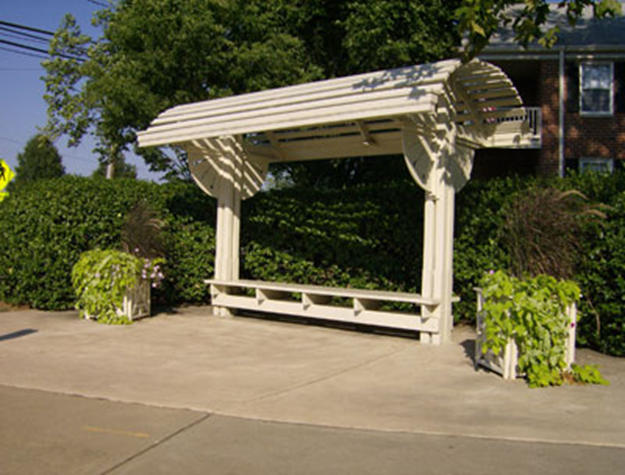
One reason for the psychological trigger that creates the escape urge is this: after recent history is consumed by memory loss in a dementia patient, the human brain chooses to believe that we still own homes, jobs, and to-do lists from decades ago. This is one reason why when you talk to elderly people and dementia patients, they remember the past better than recent history.
Research examining fake bus stops indicates that such fake stops can also increase feelings of disappointment and deception.
Dementia is one of the fastest-spreading diseases in the world. 20% of those over 70 and 40% of those over 80 suffer from this disease. Much can be written about this in our increasingly aging world. Our task should be to delay the effects of aging with activities that keep the mind sharp, without having to face the problem of waiting at fake stops where no bus ever passes.
Written by Prof. Dr. Osman OZSOY