Viewpoint
The heavy price a country pays for moving away from democracy
Ten years ago in Turkey, on July 15, 2016, there was an attempted coup. What exactly happened that night remains unclear.
In the final months of 2013, when corruption allegations against some government ministers surfaced, measures to silence independent journalists began in order to prevent the allegations from receiving widespread media coverage.
Indeed, I was one of the first victims of this. In Turkey, which was rapidly evolving into an anti-democratic environment, as an academic who spoke freely and a journalist who wrote what I thought, I was fired from both my job at the university and the newspaper where I was a columnist.
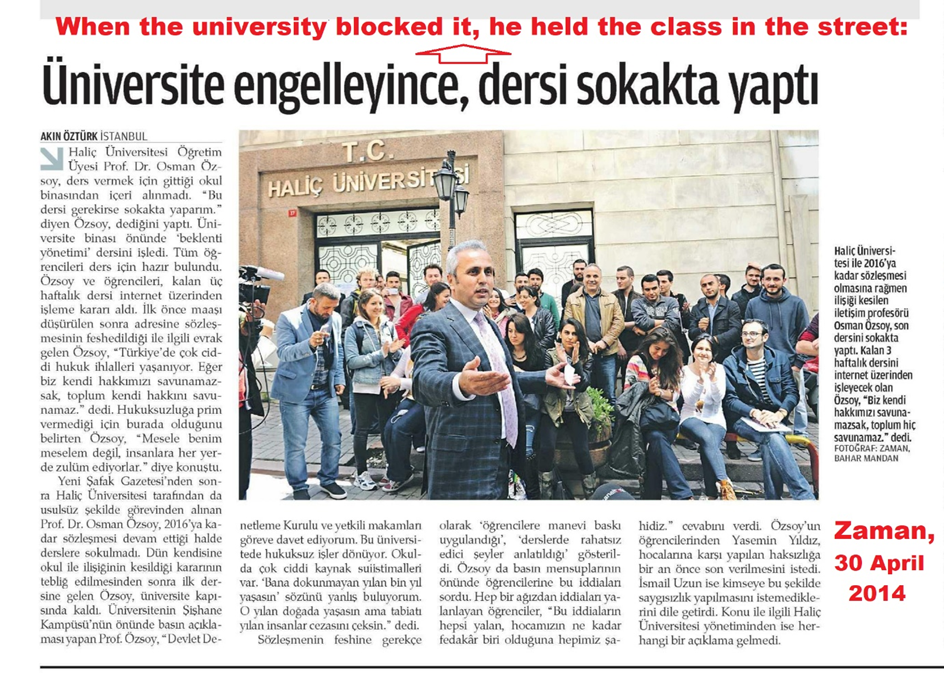
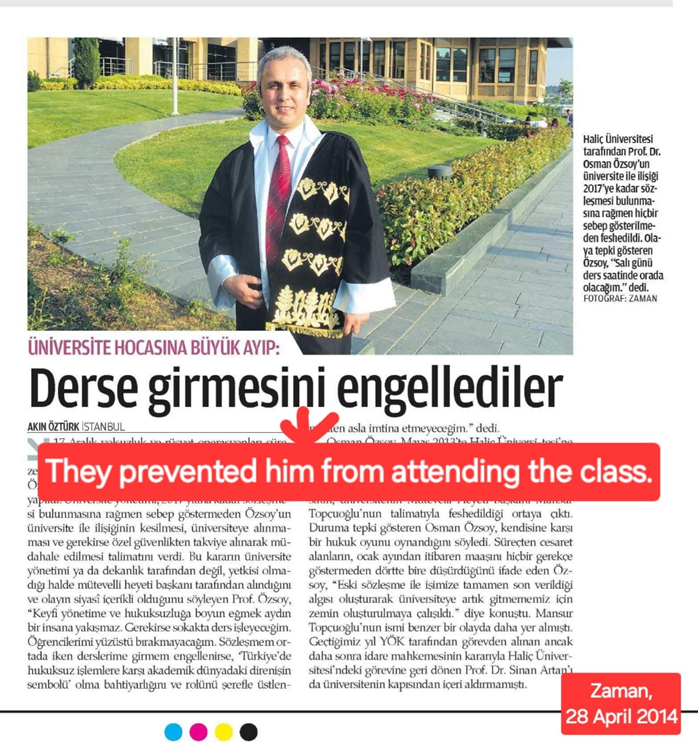
On April 29, 2014, I went to the university as usual to give my class. I was the head of department at that university, and I had also served as vice-rector for a time. That day, I was not allowed inside the university. At the students’ request, I gave my class in the street. Many media outlets closely followed the street lecture. Then I left the country and arrived in Boston in late 2015.
Then the political process in Turkey accelerated. Journalists and academics considered to be opposed to the government in Turkey began to lose their jobs. Journalists targeted by the government began to be attacked. Can Dündar, who is currently living in exile in Germany, is just one of them. The country rapidly became one of the world’s largest prisons for journalists. The aim was to prevent criticism of the government.
While this process continued, a coup attempt took place in the country on July 15, 2016. I was in New York at the time. Fethullah Gülen, whom the Erdoğan regime claims had an influence on the event, appeared before reporters from leading international newspapers on July 17 and answered their questions. He proposed the establishment of an international investigative commission to examine the matter. He stated that he would accept the outcome, whatever it may be, in advance. The Erdoğan administration did not accept this proposal.
Following pressure from society and the opposition, a parliamentary investigation committee was established in Turkey to shed light on the coup attempt. The committee completed its work and submitted its report to the Speaker of Parliament in front of a large group of journalists. Subsequently, it was alleged that this report had disappeared. The report is still missing. Whenever opposition parties propose an investigation into what actually happened on July 15th, these proposals are repeatedly rejected by the ruling party and its supporting partners.
Today in Turkey, everyone is forced to believe the government’s narrative regarding the July 15 coup attempt. This is because anyone who questions the issue, expresses an opinion, or shares anything on social media outside the official government narrative faces the threat of imprisonment. Indeed, this played a role in the closure of numerous newspapers, television stations, news agencies, and news websites that operated independently of government control after the coup attempt, and in the imprisonment of hundreds of journalists.

The basic policy is this: to silence all voices other than the government’s view on what actually happened on July 15th. To prevent journalists, intellectuals, and academics from investigating the matter. This is why Nazlı Ilıcak, one of Turkey’s most famous journalists, is kept in prison despite being close to 80 years old. This is also why Ahmet Altan, a journalist whose books have won numerous international awards, and Professor Mümtazer Türköne were imprisoned. These were courageous people, and if they weren’t imprisoned, they wouldn’t hesitate to investigate what really happened.
Thousands of officers, police officers, and public officials were dismissed from their jobs on the grounds that they had an influence on the July 15 coup attempt. Those imprisoned were tortured. The state’s official news agency released images of the torture. These inhumane images were published in pro-government newspapers. The number of those dismissed from their positions in the state is said to be close to 150,000. Thousands of academics were dismissed from universities.
The government went so far in its arrests that, in order to create the perception of external influence (especially US influence) in the coup attempt, it also imprisoned American pastor Andrew Brunson. Erdoğan referred to Brunson as a terrorist in many of his speeches. He said that Brunson would not be released from prison as long as he was in office. US President Trump later said in many speeches that he called Erdoğan on the phone, secured Brunson’s release, and hosted him at the White House.
But not everyone was as lucky as Andrew Brunson, who was accused of being a terrorist by Erdoğan. More than 2 million people have been investigated for terrorism simply for being anti-government. Over 500,000 people have been imprisoned.
Selahattin Demirtaş, the Kurdish party leader who ran against Erdoğan in the 2014 presidential elections, was also imprisoned in 2016 and remains in jail. Ekrem İmamoğlu, the mayor of Istanbul, who was expected to run against Erdoğan in the upcoming election but was arrested, has also been in prison for over a year.
The July 15th Incident, the true nature of which remains unknown, was used as a pretext to suppress all opposition in the country. Numerous companies known to be anti-government were seized. These billion-dollar companies were then transferred to individuals close to the government.
Numerous mayors belonging to opposition parties have been imprisoned on various charges. They were forced to resign from their parties and join the ruling party. These processes are still ongoing. Official European organizations state in their reports that there is no longer a fair election environment in the country and that the rule of law has been suspended. Many YouTubers who interviewed people on the street and listened to the voice of the public (such as Arif Kocabıyık, Hasan Köksoy, Turan Kural / Mehmet Koyuncu, etc.) were either imprisoned, placed under house arrest, or had travel bans imposed on them.. Some of those who complained about the high cost of living in front of microphones were imprisoned, while others lost their jobs. I have friends who had significant careers in Türkiye but now make a living as painters (Kemal Gülen etc) or fence builders (Yusuf Subaşı) etc. in the countries where they sought asylum. Kemal Gülen was the face of a highly-watched channel in Türkiye for over 20 years. He was targeted for imprisonment simply because of his family ties to Fethullah Gülen, but he managed to leave the country. However, because he left Türkiye, his wife was held hostage in prison for over two years. There are also wealthy individuals who had fortunes worth hundreds of millions of dollars in Türkiye, but were framed and had their assets seized, and now make a living as Uber drivers in other countries (Abdullah Katırcıoğlu etc).

As a former journalist and academic who lost my job, I try to observe what is happening in Turkey from afar. Hundreds of thousands of well-educated people have left the country. During this process, some of my friends who were unjustly imprisoned (Ali Ayverdi, Mahmut Sucu, etc.) died in prison, some contracted incurable diseases and later died (Ahmet Turan Alkan, Hakan Şahinli, etc.), and others found themselves in extremely difficult situations. There are also people who drowned in the sea or rivers between Turkey and Greece while trying to escape from Turkey. I have mentioned them in my previous articles.
Turkey, moving away from democracy, has become a country with the highest inflation in the world, rapidly impoverishing, and a world leader in corruption within 10 years. It has become the country with the most imprisoned journalists, and the total number of detainees in its prisons exceeds the total number of detainees in all European countries. There is now a regime that boasts about the number of its prisons.
Developed democratic countries should abandon their policy of supporting dictators as long as it serves their own interests. This is one reason for the problems the world faces and the heavy refugee influx we encounter. Everyone has a natural right to live a humane life and to be in a free country.
Making the voices of those who have been victims of injustice in Turkey or elsewhere heard is a debt we owe to humanity. I hope we all live to see a world where everyone lives in peace.
By Professor Osman OZSOY