Viewpoint
Why is anti-immigration sentiment increasing?
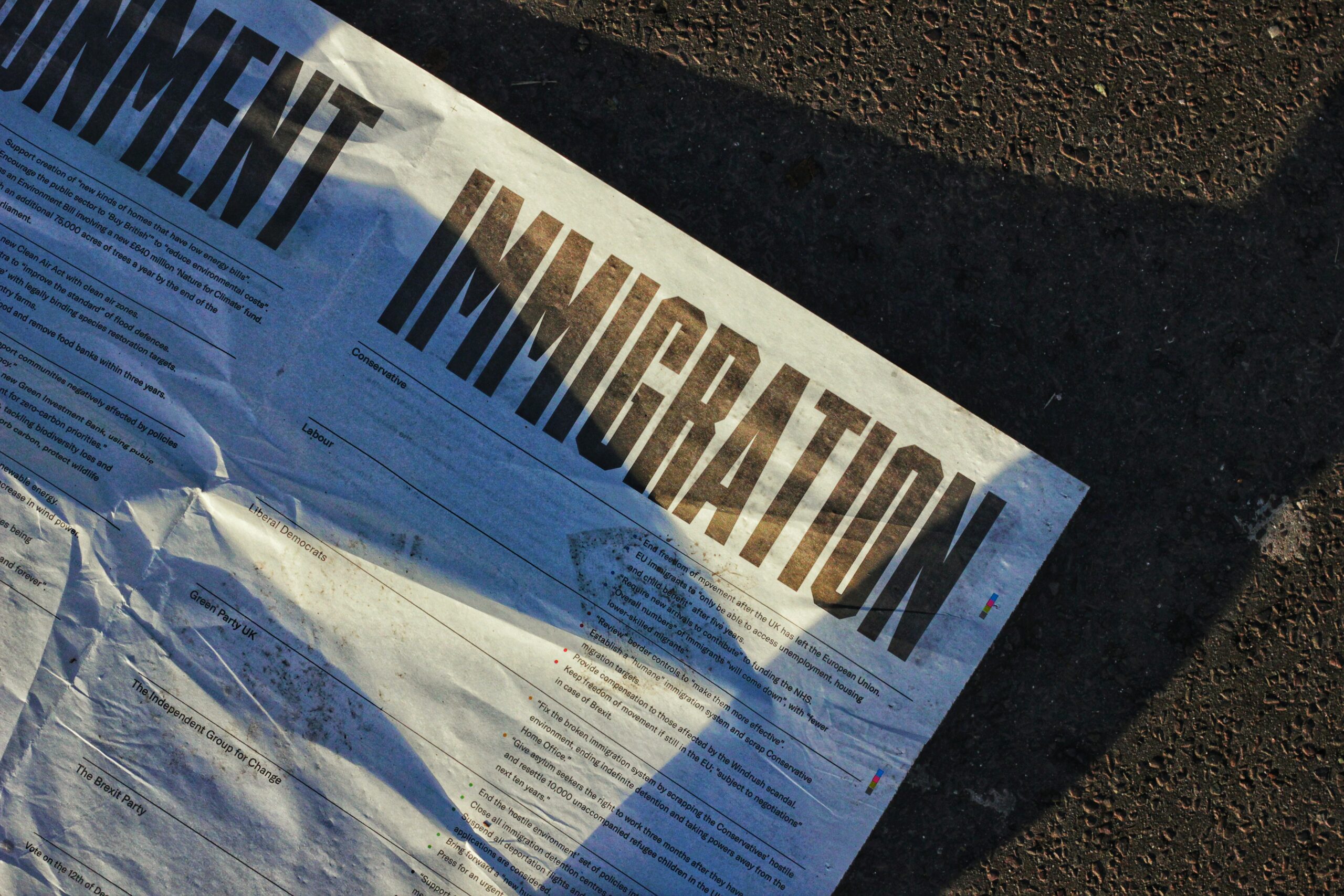
It is difficult to analyze social events based on only one reason. In fact, many events may have very different reasons than what is apparent. When social events and social tensions reach a breaking point, they look for an excuse. This situation is like a spark that starts big fires.
Just as the growth of a fire is related to the type, quantity and distribution of the combustible material and the amount of oxygen in the air is also a factor in this, so are social events. When an event that triggers an event finds a suitable ground in society, it suddenly flares up and spreads rapidly. The intensity of its spread depends entirely on the social fabric and current conditions of the society.
There has not yet been enough academic studies on the political, social and economic effects of the pandemic in the world. To be honest, I did not expect the days of the pandemic, which turned human life into a nightmare for almost two years, to be forgotten so quickly as if they had never happened.
We have forgotten the pandemic itself, but we are living through its effects, feeling them deeply. Rich Western countries have seen high inflation for the first time since World War II. The pandemic’s impact on food prices has been particularly severe on low-income groups. Many businesses have closed. Millions of people have been left unemployed. There were human losses in families. Travel restrictions negatively affected the psychology of people and society. It may seem a little strange to you, but Putin, taking advantage of the pandemic period when the world was closed in, attacked Ukraine when the death toll was at its peak and every country was trying to manage its own pandemic process with difficulty. Millions of Ukrainians were forced to leave their country.
The highest migration in the world occurs from countries where global powers are struggling for dominance. In these countries that have fallen into chaos, people who are worried about their lives, who have lost their jobs, and whose order has been disrupted see escape as a solution.
Many European countries, as well as the US and Canada, initially accepted immigrants, seeing them as fresh blood for their aging populations. When the conditions in the countries changed after the pandemic, opposition parties began to try to turn this discontent in society into a political opportunity, which started a new era.
The size of the economic pie in a country and its fair distribution also determines the welfare of that country. When the economy shrank during the pandemic and many people lost their jobs, the pie also shrank. At this point, immigrants were perceived as people who received an unfair share of the country’s pie.
Political parties that wanted to turn this into an opportunity targeted immigrants and saw that this anti-immigrant sentiment would bring them votes. The reaction against immigrants spread rapidly in all countries that received immigrants. Trump won re-election with anti-immigrant sentiment. The votes of anti-immigrant parties increased rapidly in European countries, especially Germany.
Rising anti-immigration sentiment has had a profound impact on Canadian politics. As the immigration issue has become a defining issue on the political agenda, parties that criticize the government’s immigration policy have increased their votes. Immigrants, who were not political material when things were going well in the country, have become easy targets when things go wrong.
There is another important issue. Some immigrants who could not quickly adapt to life in the countries they migrated to or who were involved in crime in their own countries and carried these habits to the countries they migrated to, caused an increase in crime statistics such as theft etc. This situation has become an event that disturbs the peace of mind of those who are not against immigrants.
Let our final words be this; It is not possible for any country to completely turn a blind eye to what is happening in the world, to ignore other people’s problems and be happy and peaceful. Even if this is technically possible, it is not possible in conscience. As long as political, social and economic prescriptions that will bring peace and tranquility to all of humanity are not worked on, it does not seem possible for humanity to find peace.
By Prof. Dr. Osman OZSOY