Editorial
Hormuz and the End of the Era of Maritime Hegemony: How Iran Is Redefining Power in the International System
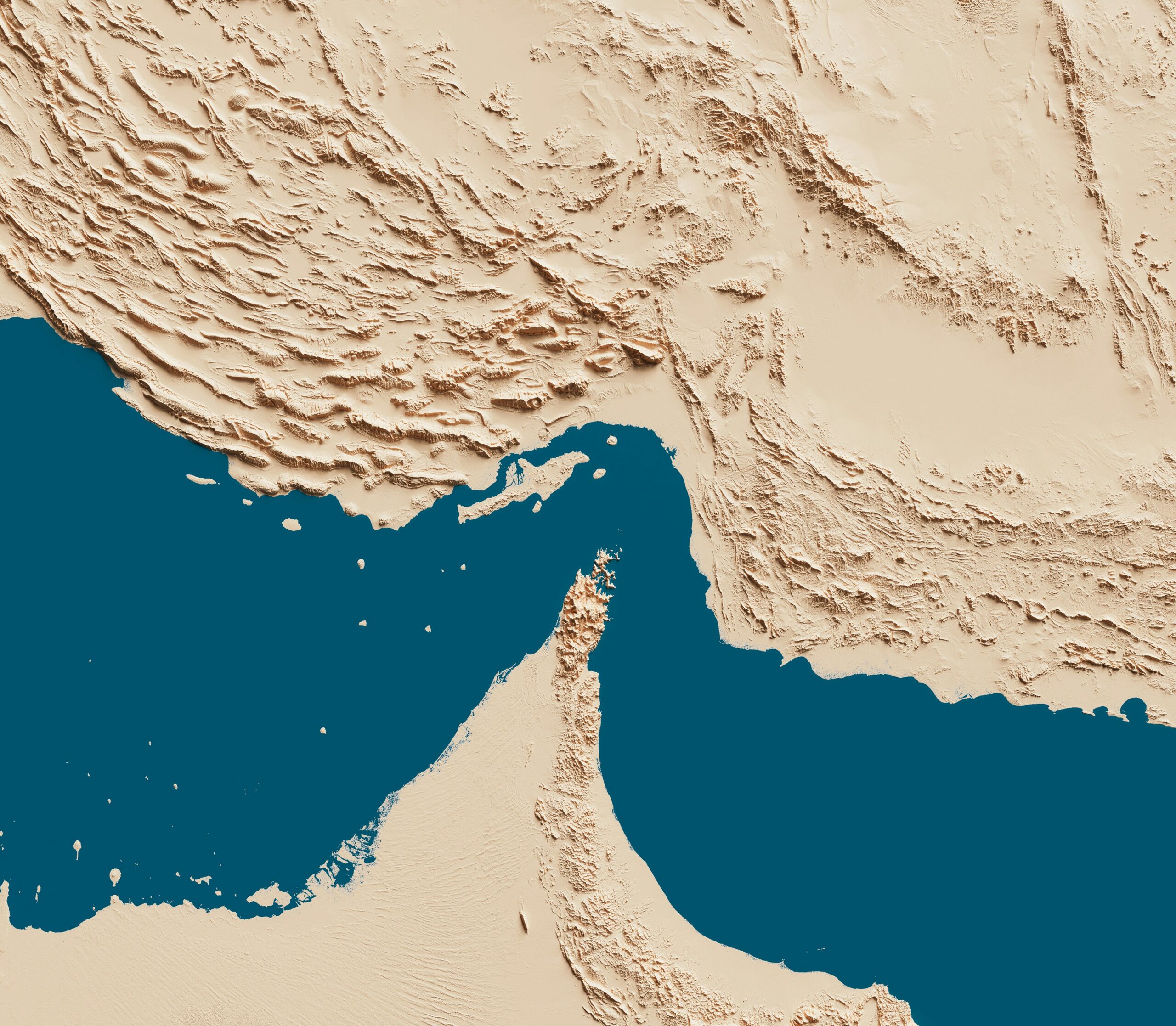
Not all wars are alike, nor are their outcomes measured solely by the number of targets destroyed or the scale of military superiority displayed on the battlefield. Some wars conclude with negotiated settlements; others end by redefining the very rules by which power is understood. Under the scenario now unfolding, the confrontation over the Strait of Hormuz appears to belong to the latter category. The central issue is no longer whether a strategic waterway can be opened or closed. Rather, it has become a test of one of the fundamental assumptions underpinning the post-Cold War international order: does American military power alone still possess the capacity to enforce the global order it seeks to preserve?
Since the American naval strategist and historian Alfred Thayer Mahan articulated his celebrated theory in the late nineteenth century, command of the seas has been regarded as the cornerstone of global power. Mahan argued that whoever controls the world’s maritime trade routes ultimately shapes the international economy and, by extension, the political choices of other nations. Throughout the twentieth century, the United States embraced this strategic doctrine, constructing the largest naval force in history on the premise that freedom of navigation was not merely a legal principle, but a central pillar of American leadership within the international system.
Yet geopolitical reality has never been governed exclusively by military superiority. Halford Mackinder argued that geography possesses the ability to constrain even the greatest powers, while Nicholas Spykman maintained that the Rimland—the vast belt connecting continental landmasses to the world’s oceans—ultimately determines the global balance of power because it controls the movement of trade, resources, and energy. Viewed through this theoretical lens, the Strait of Hormuz is far more than a narrow maritime passage. It is a geostrategic chokepoint where the interests of major powers converge and where geography itself becomes an independent strategic actor capable of imposing constraints on every participant.

Within this framework, the present crisis demonstrates that air superiority alone is insufficient to reshape the maritime environment unless it is accompanied by the ability to restore confidence among financial markets, insurers, and commercial shipping companies. Economic history consistently reminds us that merchant vessels navigate according to calculations of risk, insurance premiums, and operating costs rather than military maps. Once alternative routes become economically or politically more hazardous than traditional ones, geography inevitably reasserts itself as the most enduring determinant of strategic reality.
History offers several instructive precedents. During the Suez Crisis of 1956, Britain, France, and Israel achieved overwhelming military success, yet ultimately suffered a decisive political defeat, marking the beginning of Britain’s imperial decline. During the Tanker War in the Persian Gulf in the 1980s, experience demonstrated that safeguarding maritime commerce depended not only upon naval deployments but equally upon political arrangements capable of reducing the incentives for targeting commercial shipping. Likewise, the closure of the Strait of Tiran in 1967 illustrated how control over narrow maritime chokepoints can reshape the strategic landscape of the entire Middle East.
The more profound reading of today’s crisis, therefore, lies not in asking who currently controls the Strait of Hormuz, but in questioning whether we are witnessing the emergence of a new understanding of power itself. The international order established after 1991 rested upon the assumption that American military predominance could guarantee the security of global trade routes and uphold the rules governing international navigation. Today, however, the growing complexity of geopolitical competition, the deep interdependence between energy markets and global commerce, and the mounting costs of prolonged military interventions all suggest that deterrence is no longer defined solely by aircraft carriers and naval fleets. Instead, it increasingly emerges from the interaction of geography, economics, and political will.
History further teaches that great powers rarely lose their position because of a single defeat. Rather, they decline when the instruments that once secured their dominance become progressively less capable of explaining—or managing—the realities of a changing world. Britain confronted this transformation after Suez. The United States encountered similar limitations in Iraq and Afghanistan. The Strait of Hormuz may now represent another such historical inflection point, albeit in a different form.
Maritime chokepoints are no longer merely arteries of international commerce. They have evolved into laboratories in which the concepts of power, influence, and deterrence are being fundamentally redefined. If the twentieth century was written in the language of fleets, naval bases, and overwhelming military projection, the twenty-first century may increasingly be written in a far more intricate vocabulary—one in which geography occasionally eclipses technology, and where control over critical trade corridors and global energy networks becomes a principal mechanism for redistributing international influence.
At that juncture, the most consequential question is no longer who prevailed in the Strait of Hormuz crisis. It is whether this crisis will ultimately be remembered as one of those rare historical moments when the international system began to transform long before its architects were willing to acknowledge that the rules themselves had already changed.
Written by Fuad AL Maznaee