Viewpoint
Is choosing a job or choosing a spouse more important?
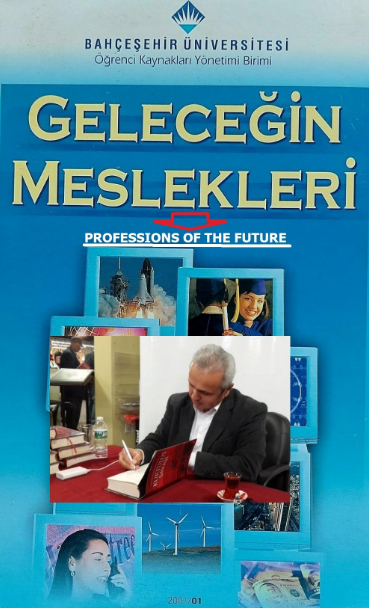
The question in the title of the article is one of the most popular topics in discussions about career planning. I’ll keep my personal opinion on this matter reserved. I would like to share different opinions on this subject here.
Everyone’s primary agenda is to have a job that will enable them to make a living. This issue is even more important for those who leave their past behind and start a new life as an immigrant or refugee in another country where they may not know the language or culture.
While there were only 431 types of professions in the world in the 1850s, today this number is around 50 thousand. Increasing occupational diversity does not mean that finding a job has become easier. Until a hundred years ago, approximately 90 percent of children continued their family’s work.
This picture has become completely different in the last 60-70 years. Although job diversity has increased, finding a job has not become easier. Moreover, the cost of accessing work has increased. The way of acquiring a profession based on the master-apprentice relationship was replaced by a process in which the diploma gained importance. The chances of those who graduated from good universities increased. Meanwhile, among the new professions that entered our lives rapidly, there were those that left our lives just as quickly. Those who could not renew themselves in their work lost their jobs. Continuity in education has gained importance.
In 2001, I wrote a book called “PROFESSIONS OF THE FUTURE” for Bahçeşehir University, where I was working at the time, in Turkey. It was the first book in this field. As a matter of fact, when the book was published, it attracted a lot of attention in educational circles. There were many news and comments about the book in the media. In fact, Yeni Şafak newspaper, known for its closeness to the government, printed the book (more than 100 thousand copies) and gave the book as a gift to all the newspaper’s readers on the days when young people were choosing to go to university.
At that time, it was not possible to obtain satisfactory information on the Internet. The internet was still in its infancy. I researched and filed documents and information about professions in the Harvard University library when I was in Boston in 1999.
After the book was published, I received a lot of reader feedback. But what impressed me the most was the message from a student named Emrah Gültekin, who said he had just finished the 9th grade. In his message; “He stated that he had just finished the first year of high school, that he still had 3 years of high school, maybe 4-5 years of university, and then about 9-10 years, including the compulsory military service in the country, and added the following; He was asking, “Some professions that are popular today will perhaps lose their former importance in 10 years, so what kind of professions can I recommend to him for the next 10 years when he will start his life?“
I shared this message I received from Emrah Gültekin with the ministers of the government and the leading figures of this country. I also discussed the issue in my column in the newspaper. I stated that he set a good example of the potential and perspective of the new generation.
I also made a presentation at the university on “Professions Without a Future”. I would especially recommend young people not to turn to professions that are certain to not exist in tomorrow’s world. Parents and teachers should also guide young people on this issue.
Let’s go back to the question in the article title. In the debate about “Which is more important in life, choosing a spouse or choosing a profession?“, the number of people who answer “profession” is not small at all. While the process of choosing a spouse sometimes results in marriage very quickly, the majority of people say that choosing a profession or leaving a profession and moving to a new professional field is not very easy.
Because while it sometimes takes many years of training to acquire a profession, the process of meeting someone and marrying them can happen in a much shorter time. Moreover, a person’s profession affects his social status in society and even the environment in which he lives. There are even those who say that a person’s profession can be one of the effective factors in determining his/her spouse. Whether we agree with these discussions or not, whether we like it or not, these are the experiences and facts that life reveals.
Traditional professions are under great threat. Developments in the field of technology deeply affect many professions. For example, artificial intelligence (AI) is said to leave tens of millions of people unemployed in a short time. Robots are replacing humans. We watched it on the news. Hollywood actors went on strike in July for the first time in 43 years, bringing the American film and television industry to a halt. The reason for the strike is the failure to reach an agreement that would better protect Hollywood actors and employees against artificial intelligence. The union argues that “artificial intelligence poses an existential threat to creative professions.” We do not know how Artificial Intelligence will directly affect marriages, but it is obvious that unemployment-related reasons threaten marriages and make couples unhappy.
Let’s see what time will show..
by Osman Ozsoy