Teacher’s Voice
Some memories of the virtual classroom during COVID-19
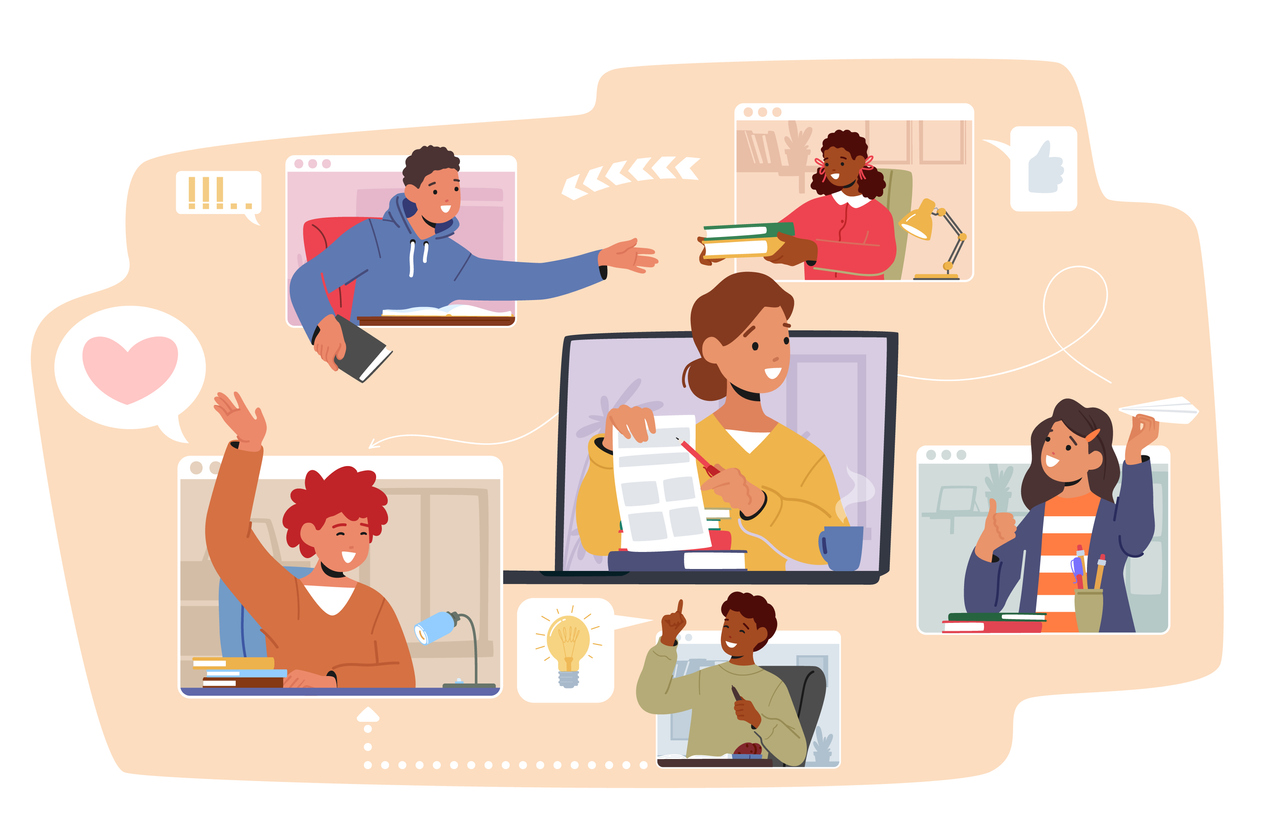
When COVID-19 shut down our schools and campuses in February 2020, all classes immediately went into virtual classrooms.
At my school, everyone was given Zoom schedules for their courses. If my students could access Zoom, they could attend a class with me. That week, I took a crash course in hosting Zoom meetings, so that I could do the right thing for everyone, especially our students who got herded without warning into AI classrooms, many on their way to school when lockdown began.
Zoom “life” during the lockdown
To me, the Zoom classroom was both real and artificial. I certainly saw all the students on camera by clicking “video”; I also knew to “unmute” so we could hear each other.
But the virtual classroom made us look flat and glum, and many students were wearing pajamas. Some were eating or feeding young children while others had family members cooking or talking in the same room. A few of our classes also experienced sound interference from television sets and Wi-Fi.
My training pointed to delivering a shorter class that gave students time to read ahead, study independently or in small groups, and work with me individually – at least in theory. In reality, many students looked sleepy and bored. Only a few came prepared, and during a class, half would check in and out multiple times or turn off their cameras. Some “exited” after only ten minutes or while I was making introductory remarks.
During early Zoom days, I would feel strangely tired after a class. To compensate for what I felt as low energy in virtual classrooms, I answered emails promptly, and updated class messages often on the course homepage (our “informal” classroom) where we accessed course curriculum and enriching material, and where we could communicate with each other regardless of zoom schedules.
The course homepage was not a new concept. Even before I started teaching in 1999, some colleagues had already been using programs like First Class or WebCT to offer distance or hybrid courses.
Throughout my own teaching career, and even before schools officially rolled out platforms like Desire2Learn (D2LBrightspace), I had also used WebCT to build asynchronous hubs for each course I taught, so that students in a course had a “collective home space” outside the weekly classroom.
During COVID-19 in 2020, I lost no time to designate course homepages as informal workspaces for my students. If I couldn’t give them direct human contact, I genuinely hoped to be more present in ways I could, to offset the isolation many students felt.
By late 2021, many colleagues were trying virtual meetings via Bongo, Microsoft Teams, and other programs. But after Christmas 2022, most of us were returning to real classrooms, where COVID-19 seemed like a distant memory, and where even masking mandates were optional.
Do I miss the virtual classroom in 2023?
Instead of being sentimental, I’ve accepted that we’ll always have remote classes. An example of this acceptance is adapting Zoom classes as tutorials where I would talk less but interact more with students, individually and in small groups.
But I don’t miss the fatigue after each Zoom class. I know most students also want relief from the lethargy of staring at a screen. They’re back in real classrooms, and most are happy to have human contact again. If we can sustain in-person meetings with supportive technology, we may gain fresh insight into our options and obstacles, so that we can build new resilience against future adversities.
by Mina Wong