In the Community
The Japan Foundation, Toronto (JFT)
This article is the first in a series highlighting the educational aspects of cultural centres in Toronto
First published in the 2015 Winter Issue
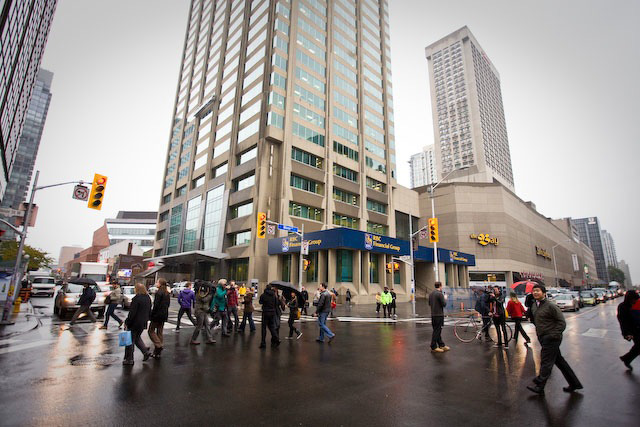
The Japan Foundation, Toronto (JFT) located at 2 Bloor Street East, is our focus in this issue of Learning Curves.
There are a variety of programs, services and events which are accessible to anyone with an interest in Japan and its culture. One does not have to speak Japanese, as all of the centre’s programming is provided in English or in Japanese with English subtitles. Many of the courses are grouped into three categories: Arts and Cultural Exchange, Language education and Japanese studies.
To keep language learners motivated classes are fun and encouraging. For example in a past intermediate Japanese class, the students learned about Japanese newspaper writing and worked together to create their own newspaper.
“We offer various courses in Japanese language education targeting learners at all levels,” explains Kate Sculllin, the Program Officer at the JFT. “For example, we have introductory courses on reading and writing hiragana and katakana, the Japanese syllabaries, for absolute beginners. We also offer more specialized language courses on cultural topics such as anime (Japanese animation), manga (comic books), Japanese holidays, [etc.] for more advanced learners.” Scullin added that in addition to language courses for students, the centre also organizes professional development workshops for Japanese language teachers around Canada.
Facilities at the centre include seminar rooms, an event hall where film screenings, art exhibitions and lectures take place and a library, which according to the website “has approximately 23,000 Japan-related print and audio-visual materials in its collection.” To borrow library materials, you have to sign up for a card, but there is no fee. The gallery and library are open from 11:30 am to 4:30 pm Tuesdays, Wednesdays and Fridays, and extended until 7pm Mondays and Thursdays; and usually open for two Saturdays a month from noon until 5:00 pm, but the opening schedule for a Saturday can vary from month to month.
I asked if there are any costs for programs and services. “Admission to our gallery is free, membership in the library is free, and most of our programs and services are offered free of charge,” Scullin informs me. “Occasionally, there are materials fees associated with some of the language courses.”
There is always something exciting happening at the Japan Foundation, whether it is free film screenings or an art exhibit (the work of Ryoji Ikeda and Walter Jule are featured through January 29, 2015), with new events coming up all the time! For more information please visit the centre’s website: jftor.org


