Love of Learning
Chasing The Dream
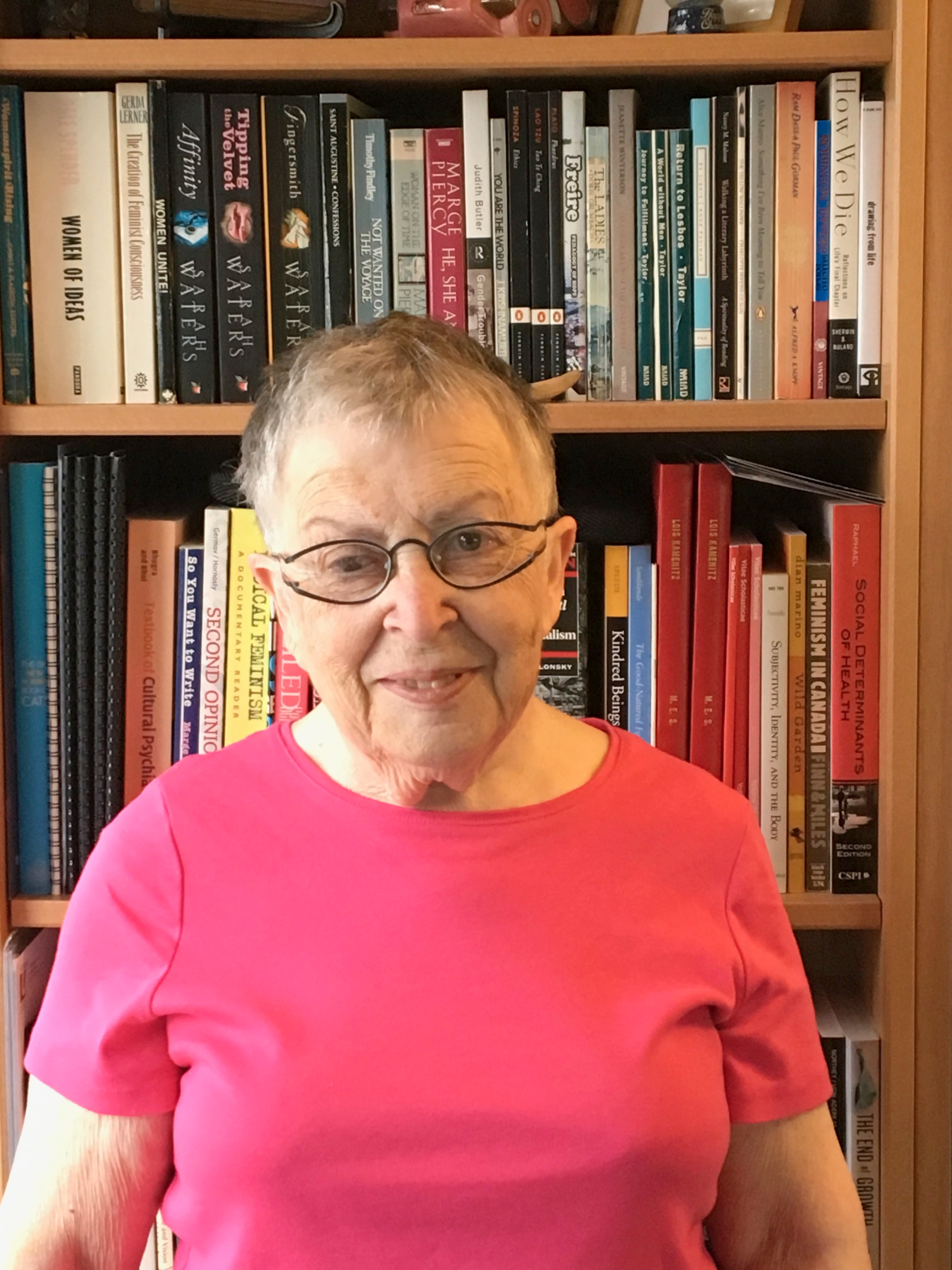
By Lois Kamenitz
Have you ever felt that you should have gone further with your education? That you were capable of more? Here is my story of chasing that dream. At the age of 70, after a long career in education, I finally believed in myself enough to trust that I could make a long-held dream a reality. In 2016 I returned to university to pursue a PhD. It had taken me thirteen years of night school to obtain a BA. The Master’s degrees that followed took less time because I could take time away from work or I had already retired. And, most importantly, there was the “tuition fee waiver” the university I attended offered to students 60 years of age or older for one undergraduate and graduate degree. That waiver made it financially possible for me to pursue further university studies. In September I will begin the fourth year of my doctoral program. At my age I have far fewer years ahead than behind me and I have chosen to live my remaining years answering what in the second half of life, “my soul asks of me.” Despite what we so often hear, there is no one right way to age.
I have chosen to research older women learners who have, within the last five years, acquired a PhD. While the focus of my research is on the stories the women tell about their doctoral student experience it is also about old age, about older women, and about the “double standard” of ageism and sexism. It is about the power of words and the opportunity I have as a storyteller to tell stories which can both help us come to terms with old age and with death and contribute to a shift in the conversation on aging, from one primarily of decline and loss to one of life stories still developing. My doctoral journey however almost ended before it even began.
The question I am often asked is why – why pursue a PhD now at my age. For me the answer is simple. Growing up a troubled child in a multi-generational eastern European immigrant family where silence spoke louder than words and there was always the presence of an absence, I sought solace in my books, my ideas, my intellectual adventures. I became a head with legs. Through the act of writing stories, I become visible to myself. And, through reading the poetry and the stories other people wrote, I learned that I was not alone. Fortunately, those pursuits were my happy place because the outlet of sports was denied to me. That continues today. I was diagnosed, at a young age, with an auto-immune bleeding disorder which meant I could not participate in any physical activity where I might injure myself. It went into remission in my thirties but in my early twenties I was diagnosed with an autoimmune and especially disabling form of arthritis which destroyed my hands and feet. To build a career, care for a family, nurture friendships, all while living with debilitating pain and significant physical limitations took courage, hard work, and an incredible belief in the possible but with the strong women and gentle men who walked alongside me, I created an amazing life.
Reflecting on my life I knew that to be successful in my PhD journey I could not complete it alone. Nor for that matter did I want to. I always believed that while each one of us can be agents of change; a better world is only possible in community with others. I reached out to other women I met who like me, were “of a certain age” and pursuing a PhD. We started a study group with four women, the group has grown to five and includes women from various academic disciplines. They range in age from their late fifties to early seventies, some are at the beginning of their doctoral program, some midway, some close to the end. We meet monthly over a working lunch and in between we keep in touch by email. We share experiences, problem solve issues of concern, celebrate successes, update each other on conferences, publishing opportunities, important deadlines, and act as critical friends for work in progress. I have wonderful colleagues and friends, a loving and supportive partner and, in just a short time, I will have that PhD in hand.